You Can't Have It All. I Chose Three.
People ask me all the time whether you can build a company and build a family at the same time.
My honest answer: yes. But not the way most people mean when they ask.
Over the last 10 years building BenchSci, I've also had three kids. I've been married the whole time. And somewhere in there, I had to confront something the standard startup narrative doesn't prepare you for: ambition doesn't come with an off switch.
When you care deeply about your work, it is very easy to justify everything in its name. The late night. The missed dinner. The distracted half-presence at a school pickup. The feeling that once this quarter wraps, or once this launch is behind you, or once the team stabilizes — then you'll make more room. But that moment never just arrives on its own. There's always a next thing. The mission doesn't pause.
I've felt the weight of that. And I've also felt what it's like to come home and realize that the people I love most are getting what's left of me, not the best of me.
The Most Honest Advice I've Ever Gotten
A few years in, I was struggling badly with this tension. I reached out to the CEO of a multi-billion-dollar company — someone I respected, someone who'd built something real and had a family through it.
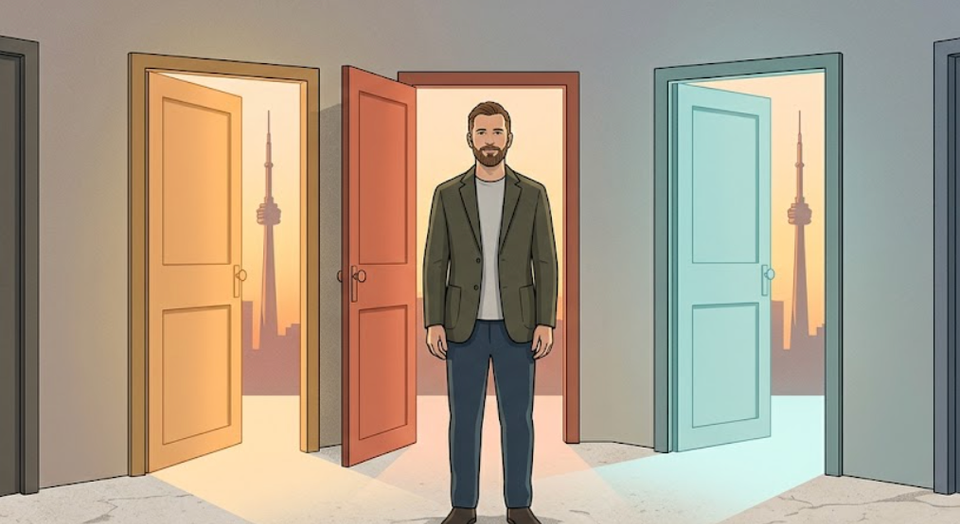
He told me: there are five big buckets in life. Family. Work. Health. Friends. Hobbies. Pick three.
That hit me hard.
Not because it was inspiring. Because it was honest. It didn't pretend there was a life-hack that let you compress eight hours of family presence into ninety minutes of "quality time." It didn't sell me a scheduling framework. It said: the tradeoff is real, so make it consciously.
I picked family, work, and health.
That doesn't mean I don't value friendship or have interests outside the office. It means I stopped judging myself against a version of life where nothing has to give. It means I made peace with the fact that saying yes to the right things requires actually saying no to others.
What Structure Does — and Doesn't Do
My routine: I wake up at 4:40 a.m., go to the gym, get home around 6:30, have breakfast with the kids, and get them to school. I work from roughly 8:15 a.m. to 6:30 p.m. Late evenings are capped at two nights a week.
That structure isn't about balance. I don't think "balance" is even the right frame — it implies some static equilibrium you can set and forget. This is about protection. If I don't decide in advance what matters, work will decide for me.
Some of that protection is daily. But some of it has to happen at the calendar level, a year out.
Birthdays. Anniversaries. High holidays. They're blocked before the year starts — not as aspirational holds, but as hard stops. No exceptions, no "let me see if I can make it work." The block goes in first. Everything else gets scheduled around it.
That might sound extreme. I think it's the minimum. When you can't be there a lot, you have to be there when it matters. And "when it matters" doesn't show up as a gap in your calendar — you have to create it deliberately, or it fills up with something else. A board meeting. A customer trip. A conference that felt important in January when you said yes.
When I travel — every couple of weeks — I push hard. Sometimes 16-hour days. That compression is part of the deal. I try to run hot when I'm away so I can be more deliberate when I'm home.
Even weekends: I don't usually work them. If I need to, I'll wake up at 5:00 a.m. before the kids are up. Not because I've figured this out. Because I've learned what disappears if I don't protect it.
The Part Nobody Says Out Loud
The hardest part isn't logistics. It's guilt.
It's loving your family deeply and still feeling the pull of a level of ambition that doesn't clock out when you walk through the door. It's knowing that meaningful work is genuinely fulfilling — not just an excuse — while also knowing that if left unchecked, it takes more than you ever meant to give.
There's a specific feeling I've had more than once, sitting at dinner, physically present but mentally elsewhere. Running a conversation from earlier in the day. Working through a problem in the background. My kids are right there, and I'm only partially with them.
That's the version of this I have to actively fight. Not the late nights — those are visible, deliberate tradeoffs. It's the invisible absence. The half-presence. That's harder to catch and harder to fix.
What Success Actually Means
Somewhere along the way, my definition of success changed.
It used to be: build the most impactful company I can. Full stop.
Now it's: build the most impactful company I can, while also having a great marriage and being an amazing dad.
Those things compete with each other constantly. Work wants your best hours. Your family needs your presence. The mission doesn't care about the school play. That tension doesn't resolve — you just get better at navigating it.
What I've learned is that this isn't really a time-management problem. It's an identity problem. A values problem. A clarity problem. The question isn't "how do I fit more in?" It's "what am I actually optimizing for?"
I'm still working on it. I don't feel like I've solved it. I'm writing this as someone still in it — still trying to be present, still failing sometimes, still recalibrating.
But I do know this: the people who pretend there are no tradeoffs aren't helping you. The honest answer is that a meaningful life isn't built by saying yes to everything. It's built by being clear enough to say yes to the right things.
Pick three. Then actually protect them.