Let's Be Honest: Not Everyone Can Grow at the Same Pace as a Startup
Disappointment results from misaligned expectations. Most people know this. Very few are honest about what it means for hiring.
In the early days at BenchSci, I interviewed every single person we hired — all the way until we reached about 50 people. Before making any offer, I had one conversation that made most candidates uncomfortable. I told them the truth: there was a real chance that either they would outgrow the company, or the company would outgrow them. And if that happened, we'd probably part ways.
It wasn't a pleasant thing to say. But it was only fair.
The growth gap
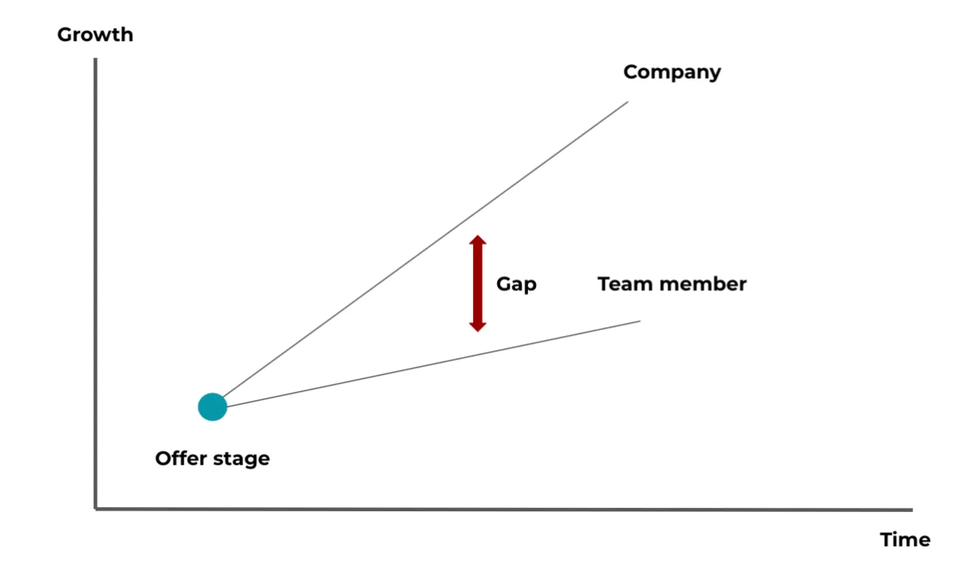
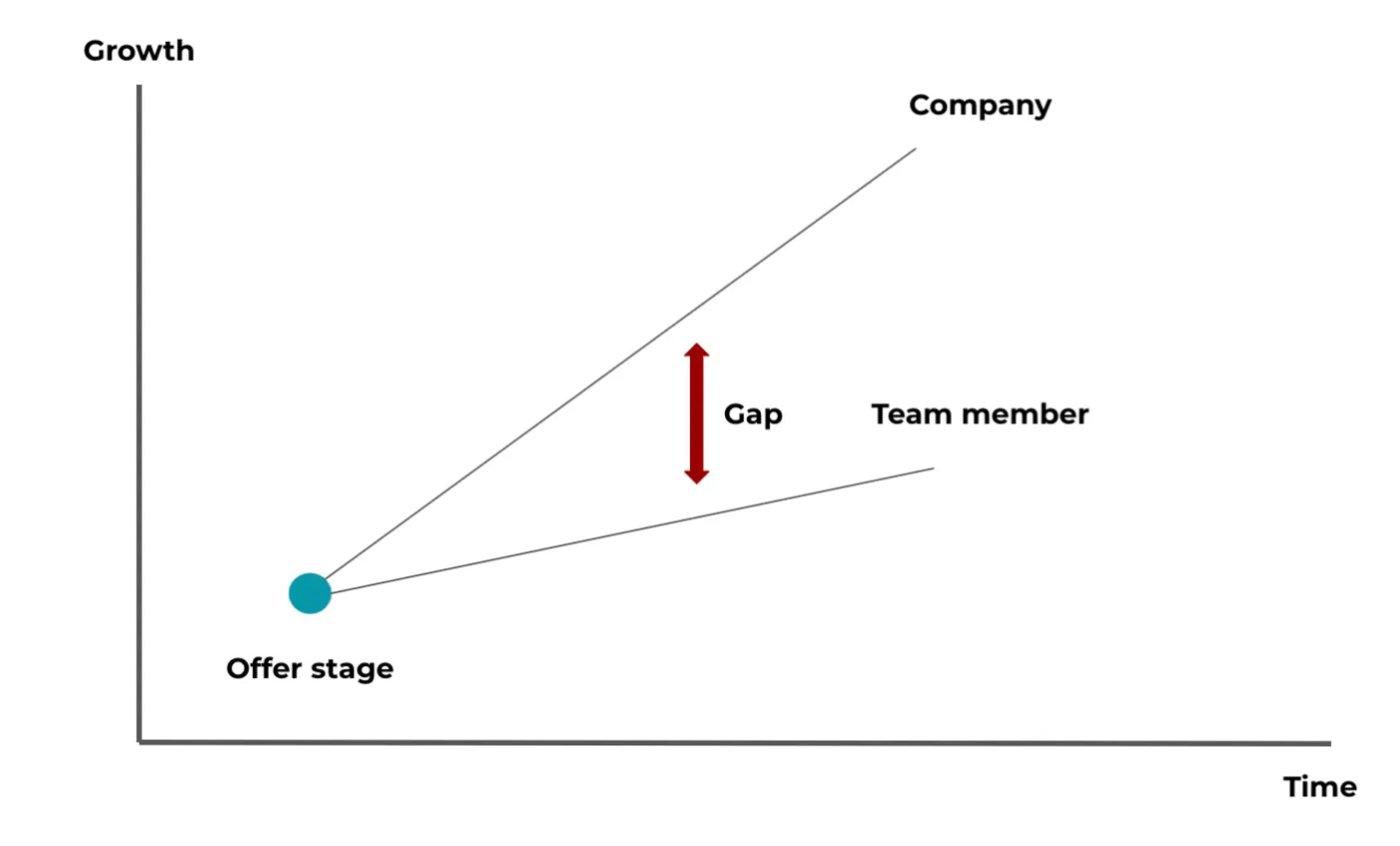
I call this the "growth gap." It's simple: a company and a team member each grow at their own rate. If those rates diverge, one side eventually outpaces the other — and a separation becomes inevitable.
When you make an offer, you're assuming alignment. The role fits. The person fits. Everyone's on the same page. But time changes things, and one of three things will happen:
The team member outgrows the company. Their skills and abilities develop faster than the company scales. They hit a ceiling — not because they've failed, but because the company hasn't grown fast enough to give them a bigger stage. These are often your best people, and losing them stings.
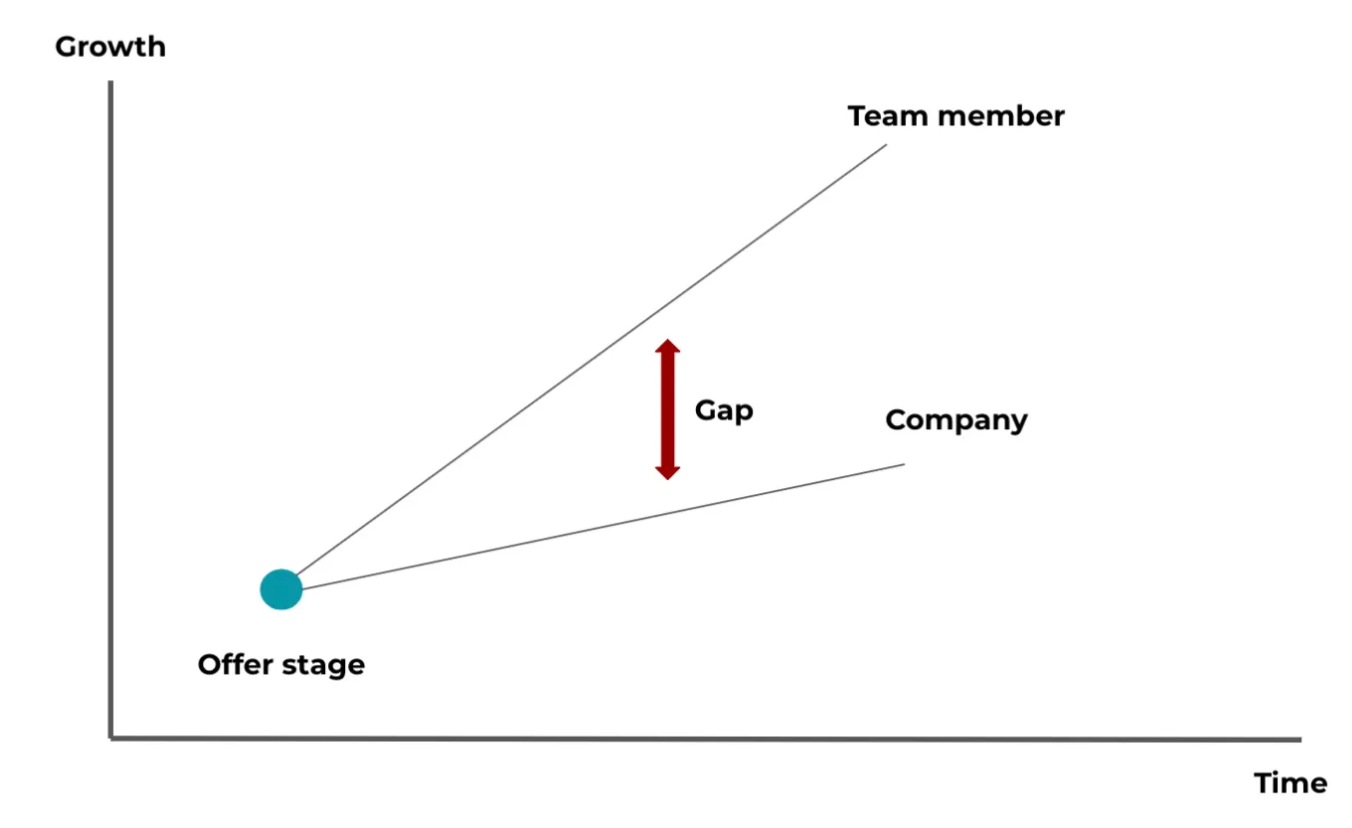
The company outgrows the team member. This is the harder one to talk about. The company doubles, the role expands, and the person can't keep pace. It's not a character flaw — it's a growth rate mismatch. But if you haven't named it upfront, it feels like a betrayal to everyone involved.
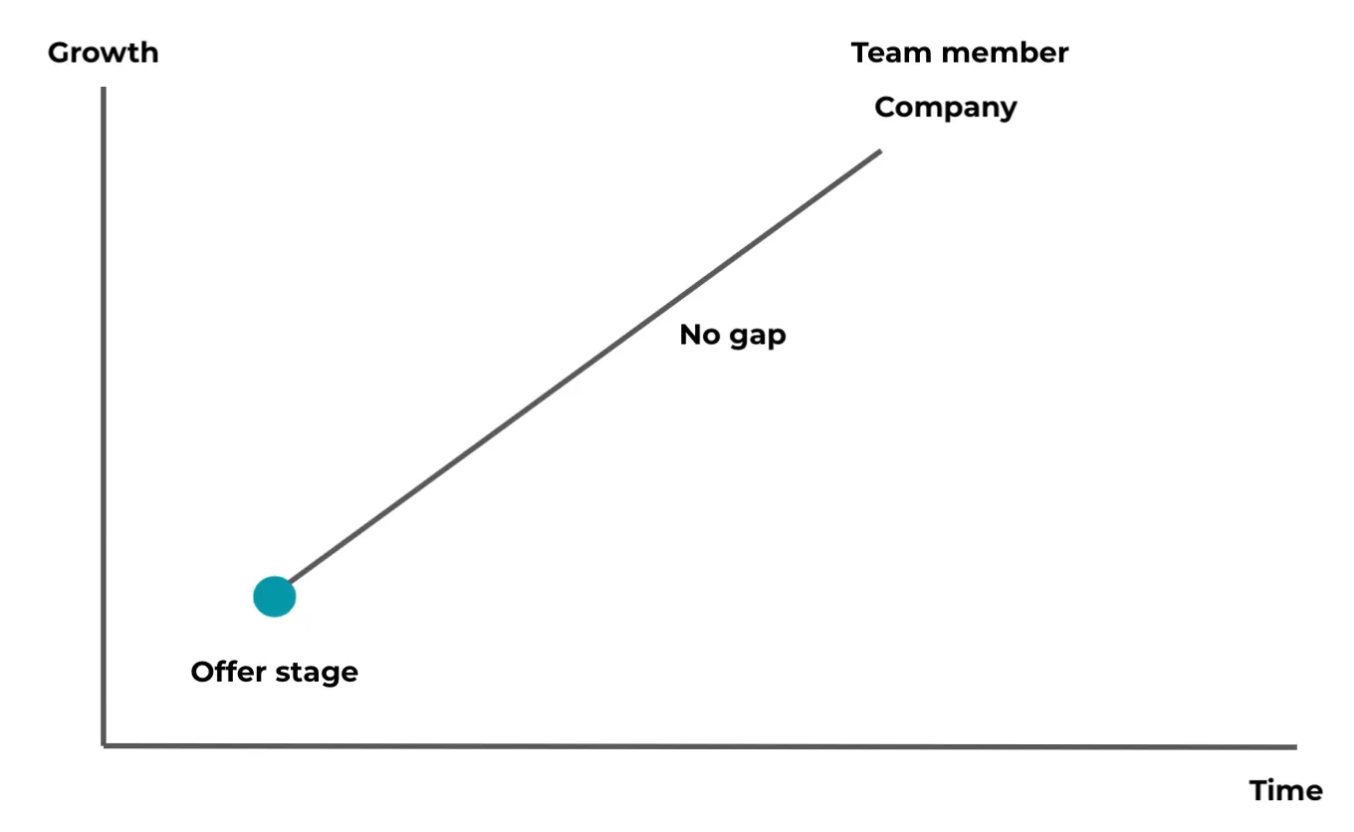
They grow together. The team member's development matches the company's expansion, and the role evolves with them. This is the ideal. It's also the least common outcome.
Why naming it early changes everything
Most leaders avoid this conversation. It feels presumptuous — you're essentially telling a new hire that they might not make it. But I found the opposite to be true. Having it upfront does two things.
First, it sets honest expectations. It puts the responsibility on both sides: on the company to keep growing, and on the team member to keep developing. It reframes a future parting — if it comes — as a predictable outcome of different velocities, not a personal failure.
Second, it makes you a more careful hirer. When you're explicitly telling someone "you might outgrow this role or it might outgrow you," you start asking sharper questions before making the offer. You think harder about trajectory, not just current fit.
From my experience, this conversation doesn't just improve retention. It prevents the wrong hires in the first place.
One more thing — and I said this to every candidate I interviewed. The growth gap applies to me too. Being a great CEO for a 50-person company does not mean you'll be a great CEO for a 500-person company. I might not scale with BenchSci. That's a real possibility, and pretending otherwise would be dishonest.
The growth gap isn't a threat. It's a fact of startup life. Name it early, and it becomes a conversation. Ignore it, and it becomes a crisis.